
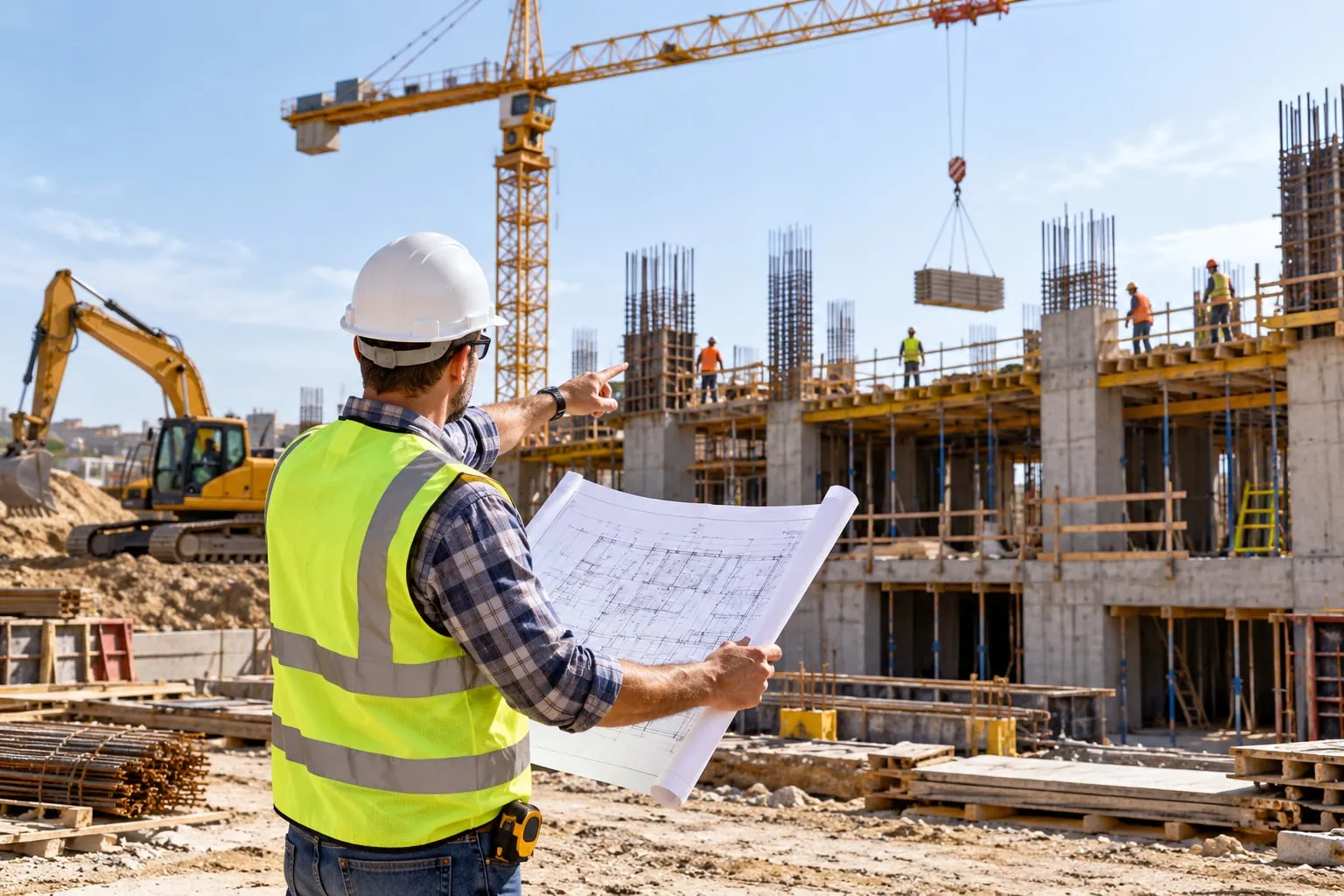
Insurance for Builders

Understand the cover builders commonly use, what clients and sites ask for, and when it gets more complicated.

Trades and constructionUpdated

Request a quote

What type of insurance are you looking for?

Contract works and public & products liability

Public & products liability only

Other insurance

Submitting this form does not arrange insurance. We'll use your details to help progress your enquiry.

The short answer

What insurance does a builder need in Australia?

Builders in Australia usually carry public liability insurance, contract works insurance for projects under construction, and tools and vehicle cover. Residential builders also need home warranty type insurance in most states above a contract value threshold. Employing staff means workers compensation, and using subcontractors adds questions about whose insurance responds.

Most common cover
Public liability, contract works, tools, vehicles
Limits clients ask for
$10m to $20m liability; contract works to the project value
State schemes
Home warranty type insurance for residential work above state thresholds
Gets complicated when
Larger commercial jobs, subcontractors, existing structures, head contract wording

Common cover

What cover do builders commonly use?

Most builders build their insurance from a few separate policies. These are the ones that come up most, and why they matter for this kind of work.

  • Public liability

    Covers injury to people and damage to neighbouring or client property arising from your projects, including work done by your team.

  • Contract works

    Covers the building and materials while the project is underway, against fire, storm, theft and accidental damage. Often required by the contract.

  • Tools and equipment

    Power tools, levels, scaffolding components and site equipment.

  • Commercial vehicles

    Utes, vans and trucks used to move people, materials and waste.

  • Plant and equipment

    Owned or hired plant such as skid steers, mini excavators and site generators.

When it gets harder

When does insurance get more complicated for builders?

A carpenter doing small renovations is easy to insure. A builder running a $2 million commercial fit-out with subcontractors, hired plant, expensive materials and a deadline has several exposures at once, and each one needs to line up with the contract.

  1. The head contract sets the rules

    Head contracts usually spell out who insures the works, the liability limit, whose interests must be noted, and sometimes specific wording. A cheap online policy can technically be insurance but still not meet the contract.

  2. Subcontractors

    If subcontractors don't hold their own public liability, or a worker's injury claim lands on you because of how they were engaged, your policies can end up paying. Insurers ask about subcontractor spend and whether they are insured.

  3. Existing structures and renovations

    Damage to the existing building during a renovation or extension can be treated differently from damage to the new works. It is worth checking how the contract works policy handles it.

  4. Projects bigger than your annual policy

    Annual contract works policies have a maximum project value. A job above that limit may need a separate single-project policy.

  5. Home warranty type schemes

    Residential building above certain contract values needs state-based home warranty or domestic building insurance, and each state runs it differently. Eligibility can depend on your finances and history.

Illustrative examples

What does this look like in practice?

These are illustrative examples, not real clients, showing how the work changes the insurance.

The commercial fit-out

A builder who mainly does residential extensions wins a $2 million office fit-out. The contract asks for $20 million liability, contract works for the full value, and the principal noted on both policies. Their annual contract works policy has a $1 million project limit, so this job needs its own cover.

The storm before lock-up

A severe storm hits a frame-stage house, damaging the frame and soaking stacked materials. Contract works is the policy designed for this kind of loss during construction.

The uninsured subbie

A subcontractor's work causes damage to a neighbouring property, and it turns out they let their public liability lapse. The neighbour pursues the builder, and the builder's policy and contract terms decide what happens next.

Cost

What affects the cost of insurance for builders?

Builders' premiums depend heavily on the type and size of projects. These are the main factors.

Factors that affect insurance premiums for builders
FactorImpactWhy it matters
Turnover and project valuesMajorLarger annual turnover and bigger projects mean more exposure.
Residential versus commercial workMajorThe type of construction and the client affect risk and requirements.
Subcontractor spendMajorHow much work is subcontracted and whether subbies are insured.
Liability limitModerate$20 million costs more than $10 million.
Location and natural hazardsModerateBushfire, flood and cyclone exposure affects contract works pricing.
Claims historyModeratePrevious liability and works claims affect pricing and insurer choice.

Common questions

Questions builders ask about insurance

What insurance does a builder need in Australia?

Most builders carry public liability and contract works insurance, plus tools and vehicle cover. Employers need workers compensation, and residential builders usually need home warranty type insurance above state contract value thresholds. The contracts you sign often set the details.

Do builders need home warranty insurance?

In most states, residential builders need home warranty or domestic building insurance for jobs above a contract value threshold. Each state runs its own scheme with its own rules, so check with your state building authority.

Who insures the works, the builder or the owner?

It depends on the contract. Many building contracts require the builder to insure the works, but some principals arrange their own project cover. The insurance clause in the contract will say.

Are my subcontractors covered by my public liability?

Sometimes, depending on the policy. Many insurers expect subcontractors to hold their own public liability, and may charge more or limit cover if they don't. Collecting subcontractors' certificates of currency before they start is common practice.

What's the difference between public liability and contract works?

Public liability covers injury to people and damage to other people's property. Contract works covers damage to the project itself while it is being built.

This page is general information only. It does not take into account your objectives, financial situation or needs, and it is not a recommendation to buy any insurance product. Always read the policy wording and, where applicable, the Product Disclosure Statement.

Request a quote

Want a quote for your builder business?

Tell us your trade or industry. It only takes a moment to get started.

Request a quote

What type of insurance are you looking for?

Contract works and public & products liability

Public & products liability only

Other insurance

Submitting this form does not arrange insurance. We'll use your details to help progress your enquiry.