
The cracked neighbour's wall
Excavating for a slab next to a boundary, a concreter's work coincides with cracking in the neighbour's brick wall. Whether public liability responds depends on the policy's removal of support and vibration terms.
Understand the cover concreters commonly use, what clients and sites ask for, and when it gets more complicated.
Request a quote
Submitting this form does not arrange insurance. We'll use your details to help progress your enquiry.
The short answer
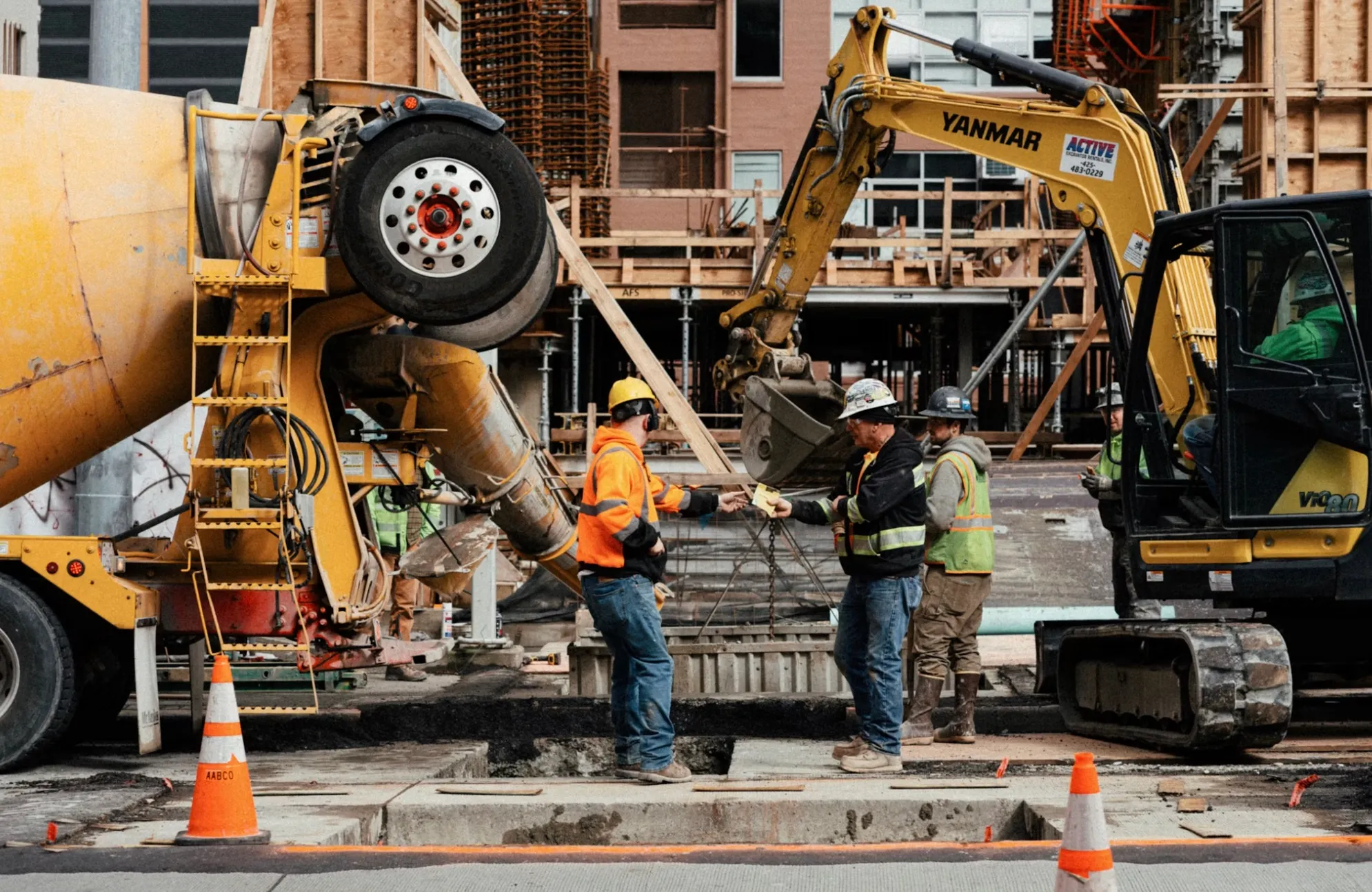
Concreters in Australia usually carry public liability insurance, commonly $10 million or $20 million, plus tools, vehicle and plant cover for mixers, pumps and machinery. Cracking, damage to neighbouring property and underground services are common claim areas. Concrete pumping, cutting and structural work can change what insurers will accept.
Common cover
Most concreters build their insurance from a few separate policies. These are the ones that come up most, and why they matter for this kind of work.
Covers damage and injury from your work, including slurry on a neighbour's car or damage to existing paths and buildings.
Mixers, pumps, bobcats and screeds are expensive and often financed.
Utes, tippers and trucks used to cart materials and gear.
Power floats, vibrators, saws and hand tools.
When it gets harder
Residential slabs and paths are routine. These parts of concreting are where policies differ most.
Excavating, cutting or vibration can weaken a neighbouring structure. Many liability policies exclude this or limit it unless it is bought back.
Pump trucks combine a registered vehicle and a working machine. The gap between motor and liability cover is worth checking.
Cutting into existing slabs risks hitting cables, pipes and post-tensioning tendons. Some policies apply a higher excess or sub-limit to underground services.
Structural slabs and suspended pours carry more risk than flatwork and may need specific declarations.
Illustrative examples
These are illustrative examples, not real clients, showing how the work changes the insurance.
Excavating for a slab next to a boundary, a concreter's work coincides with cracking in the neighbour's brick wall. Whether public liability responds depends on the policy's removal of support and vibration terms.
Coring a hole in a commercial slab, a contractor cuts a post-tensioned tendon. The repair is complex and expensive, and the policy's terms for this kind of damage matter.
Cost
These are the factors that usually move premiums for concreters.
| Factor | Impact | Why it matters |
|---|---|---|
| Type of concreting | Major | Flatwork, structural, pumping and cutting are rated differently. |
| Plant and vehicle values | Moderate | Pumps and trucks add significantly to the overall cost. |
| Turnover and crew size | Moderate | More work means more exposure. |
| Removal of support cover | Moderate | Buying back this cover, where available, adds premium. |
| Claims history | Moderate | Previous property damage claims affect pricing. |
Common questions
It depends on the policy. Damage from removal of support, excavation or vibration is often excluded or limited unless specifically included, so it is worth checking before work near boundaries.
Motor insurance typically covers the pump truck on the road. Damage it causes while pumping on site may fall under liability or plant cover instead, depending on the policies.
If you own or hire machinery such as mixers, pumps or bobcats, plant and equipment cover protects them against damage and theft. Financed equipment usually needs it.
This page is general information only. It does not take into account your objectives, financial situation or needs, and it is not a recommendation to buy any insurance product. Always read the policy wording and, where applicable, the Product Disclosure Statement.
Request a quote
Tell us your trade or industry. It only takes a moment to get started.
Request a quote
Submitting this form does not arrange insurance. We'll use your details to help progress your enquiry.