
The builder's paperwork
A carpenter starting with a new builder is asked for a certificate of currency showing $20 million public liability. Their current policy is $10 million, so the limit needs to go up before they can start.
Understand the cover carpenters commonly use, what clients and sites ask for, and when it gets more complicated.
Request a quote
Submitting this form does not arrange insurance. We'll use your details to help progress your enquiry.
The short answer
Most carpenters in Australia carry public liability insurance, usually $10 million or $20 million when working for builders, plus tools and equipment cover and insurance for their ute or van. Subcontract carpenters are often asked for a certificate of currency before starting. Formwork, work at heights and running your own renovation jobs can change what you need.
Common cover
Most carpenters build their insurance from a few separate policies. These are the ones that come up most, and why they matter for this kind of work.
Covers injury or property damage caused by your work, from a dropped beam on a neighbour's car to a structural fault that damages a client's home.
Nail guns, saws, lasers and generators are a common target for theft from utes and sites.
For the ute or van, plus any trailer.
Subcontract carpenters are often not covered by workers compensation for their own injuries.
If you take on renovation or extension jobs directly with owners, you may carry the risk of the works until handover.
When it gets harder
A subcontract carpenter working for one builder is straightforward. It changes when you take on riskier activities or start running jobs yourself.
Formwork and structural framing carry more risk than fix-out. Insurers usually want to know about it, and some price it quite differently.
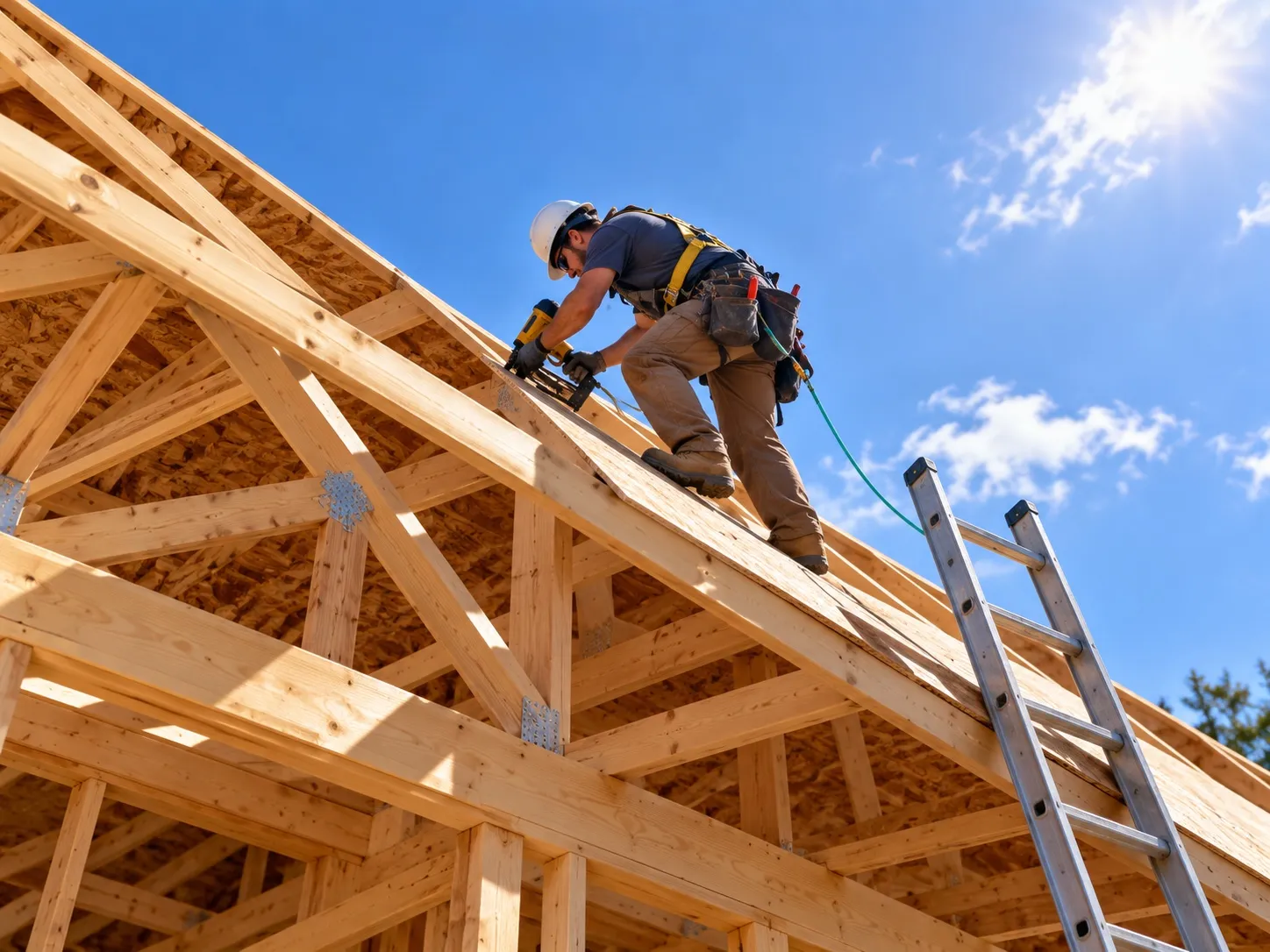
Roof framing, decks and multi-storey work involve falls and dropped objects. Some policies restrict work above certain heights unless declared.
Once you contract directly with homeowners, you may need contract works cover, and residential jobs above state thresholds can bring home warranty type requirements and licensing obligations.
Employing people means workers compensation and higher exposure. If you use other carpenters as subcontractors, insurers will ask whether they hold their own cover.
Illustrative examples
These are illustrative examples, not real clients, showing how the work changes the insurance.
A carpenter starting with a new builder is asked for a certificate of currency showing $20 million public liability. Their current policy is $10 million, so the limit needs to go up before they can start.
A deck built by a carpenter partially collapses during a party a year after completion, injuring guests. Claims like this fall under public liability and products or completed operations cover.
Tools worth $9,000 are taken from a locked ute overnight. Whether the claim is paid depends on the tools policy's vehicle security conditions.
Cost
These are the factors insurers usually look at for carpenters.
| Factor | Impact | Why it matters |
|---|---|---|
| Type of carpentry | Major | Fix-out, framing, formwork and structural work are rated differently. |
| Liability limit | Moderate | Builders often require $20 million, which costs more than $10 million. |
| Turnover and staff | Moderate | More work and more people means more exposure. |
| Work at heights | Moderate | Declared height work can affect price and terms. |
| Tools value | Minor | Higher-value kits increase the tools premium. |
| Claims history | Moderate | Previous liability or theft claims affect pricing. |
Common questions
Usually yes. Most builders require subcontractors to hold their own public liability and provide a certificate of currency before starting, commonly for $10 million or $20 million.
It depends on the policy. Some restrict or exclude work above a certain height unless declared, so check the activities and conditions on your policy.
Formwork is usually treated as a separate, higher-risk activity. It needs to be declared, and not every insurer covers it.
Often not, unless they are in a locked building or container. Many tools policies have specific conditions for tools left on site.
This page is general information only. It does not take into account your objectives, financial situation or needs, and it is not a recommendation to buy any insurance product. Always read the policy wording and, where applicable, the Product Disclosure Statement.
Request a quote
Tell us your trade or industry. It only takes a moment to get started.
Request a quote
Submitting this form does not arrange insurance. We'll use your details to help progress your enquiry.